
API integration & customer onboarding
Get a customer onto an API — and prove it works.
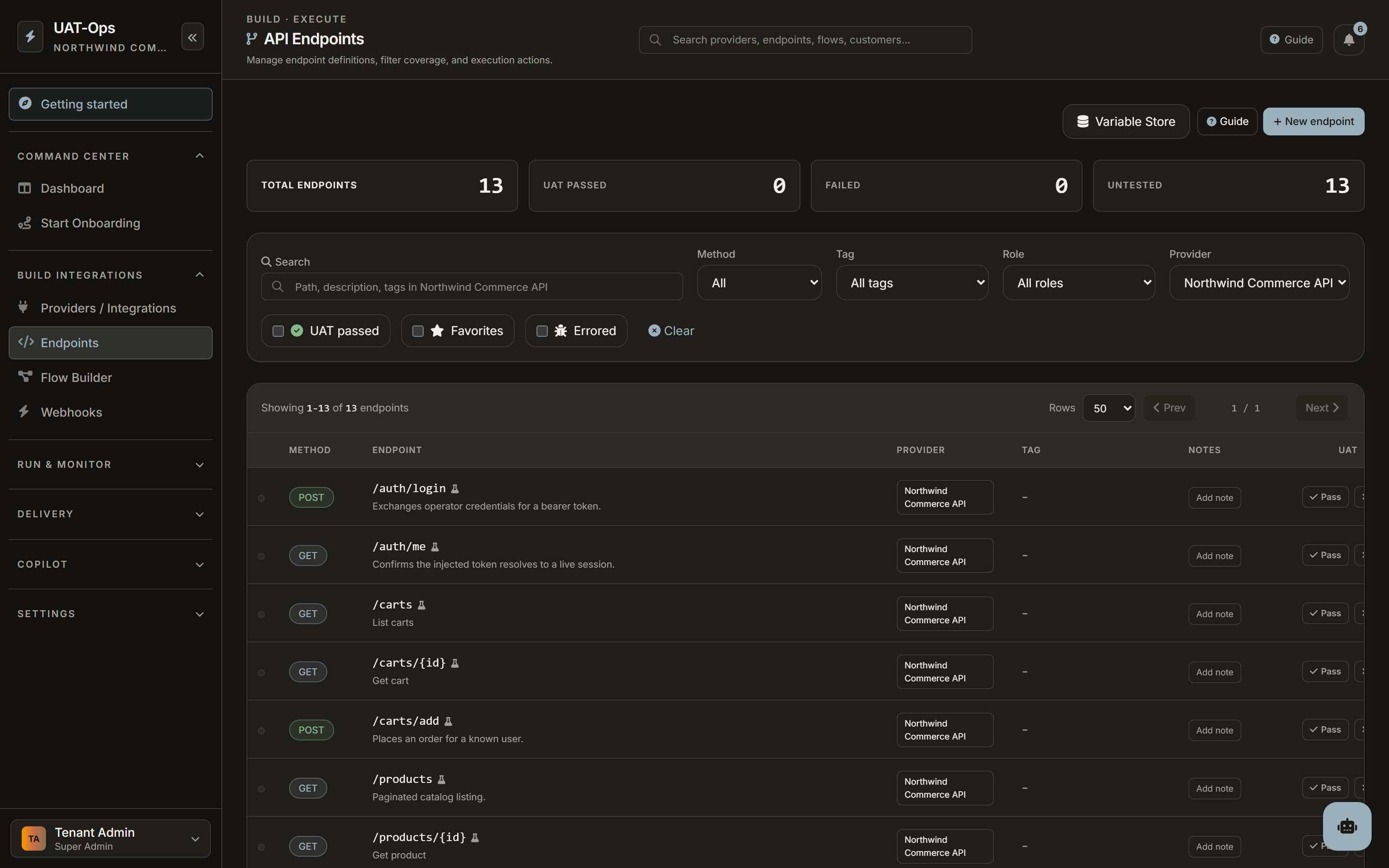
Import a provider's spec, build the call sequence, run it against their real sandbox, and keep the evidence. Every customer sits in their own isolated database schema.
The workbench isn't open to the public yet. Every integration page has a sign-up for when it opens.
Public research
Integration directory
Which payment gateways connect to which commerce platforms, how, and what goes wrong. Every claim sourced and dated, every page reviewed by a person, with gateway sandbox evidence where UAT-Ops has run the gateway. No paid placements.
Browse the directory →Not open yet
Workbench
The tool for getting a customer onto an API and proving it works. It also produces the sandbox evidence the directory publishes.
What it does →Browse the integration directory
By gateway
Import
OpenAPI, a Postman collection, an Insomnia export, or plain markdown. The format is detected rather than declared, and you review the diff before anything is written.
Compose
Chain calls into a flow. Each step pulls values out of earlier responses, and decides for itself whether a failure stops the run or is skipped past.
Prove
Requests execute server-side against the real provider and are logged as they happen. A 4xx or 5xx opens an issue without anyone filing it.
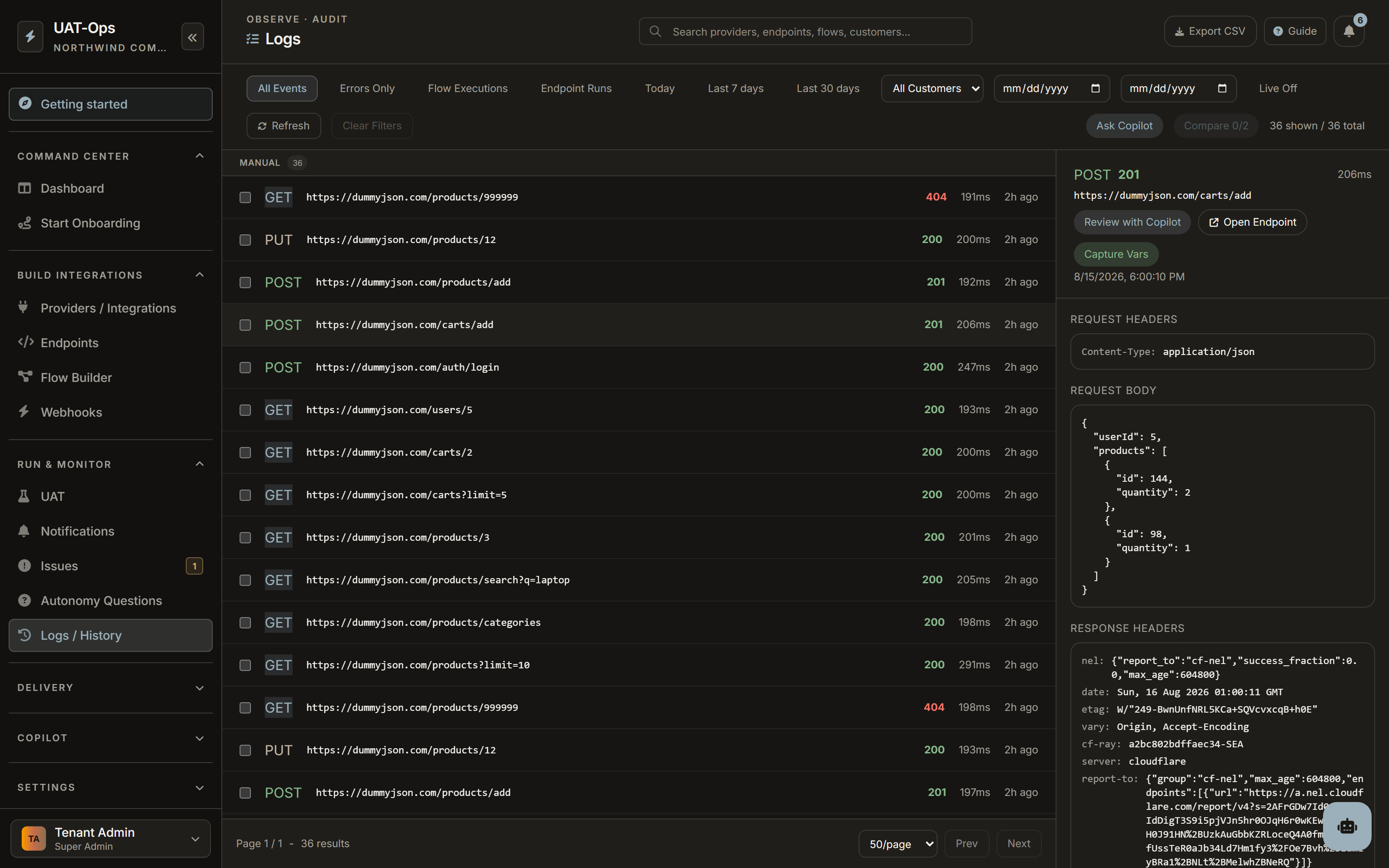
Every call, kept.
Requests, responses, timings and correlation IDs are recorded as they happen — and any one of them can be opened to see exactly what went out and what came back.
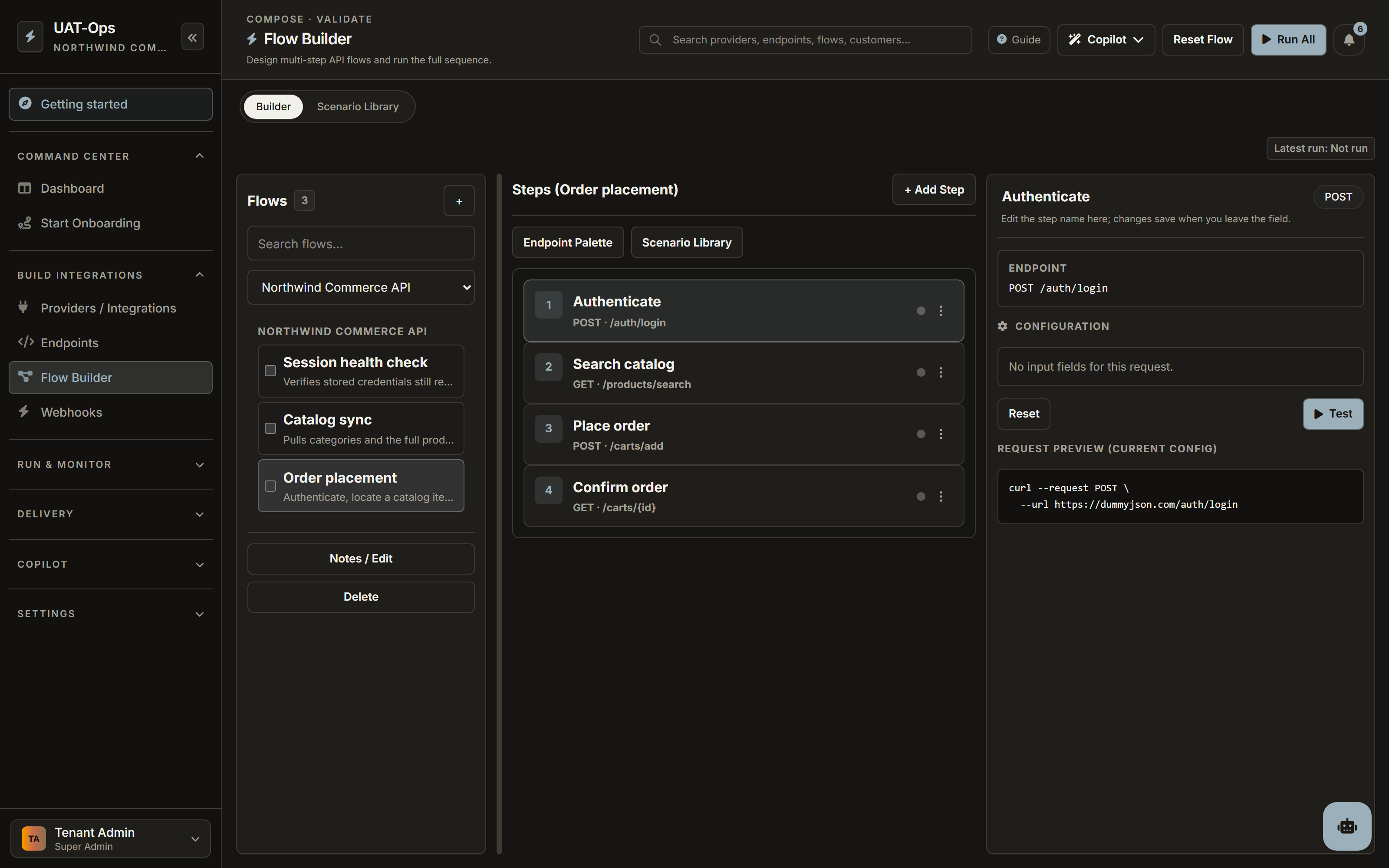
Chain the calls. Pass the values forward.
Steps run in order, and each one can pull {{variables}} out of
any earlier response. When a step fails you decide whether the run stops
or carries on without it — per step, not per flow.
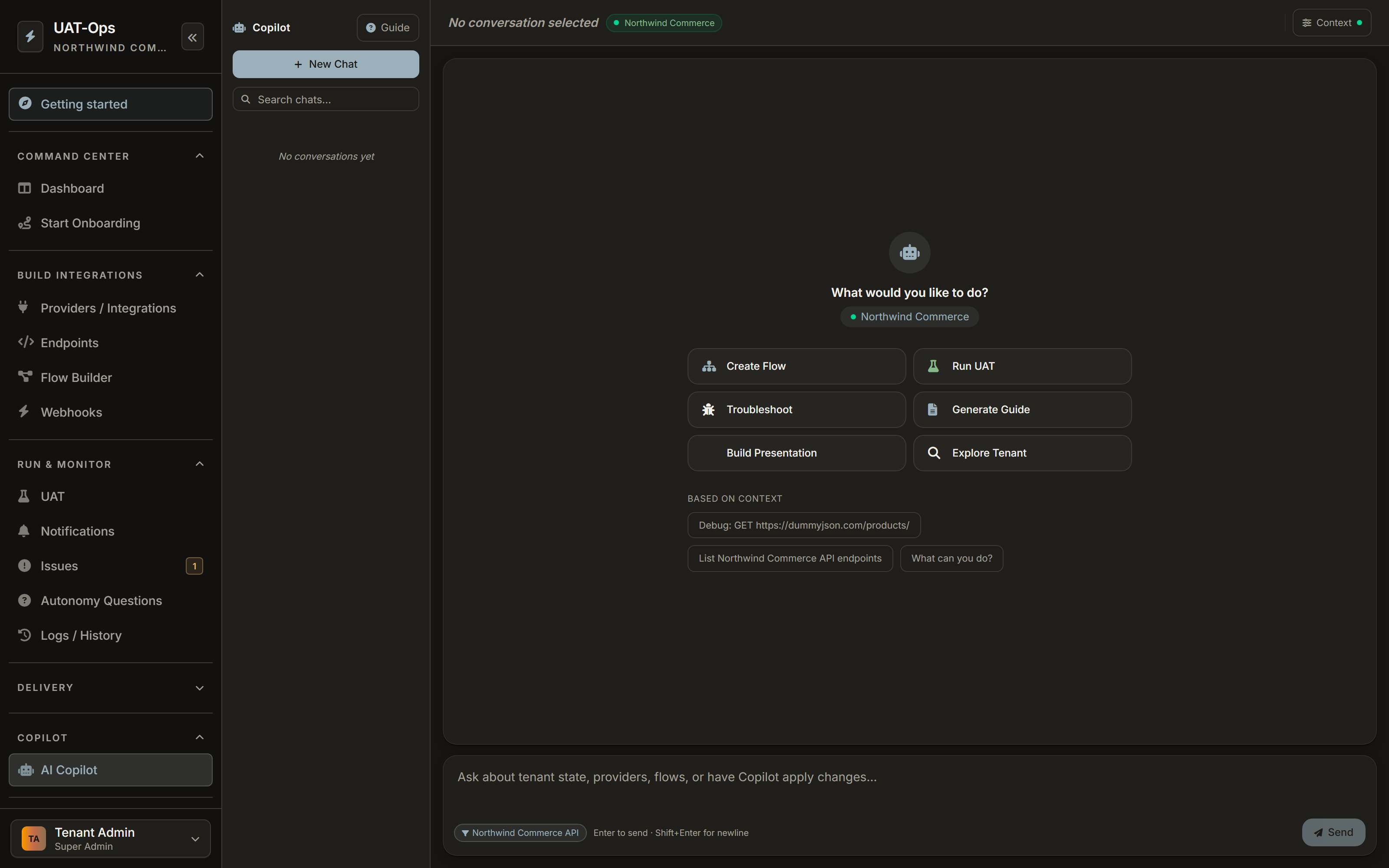
An assistant that can act — inside an envelope.
Autonomy is off until a tenant admin turns it on, and what gets turned on is specific: which operation classes, which providers, what rate and budget, which hours. Anything outside that, it asks. Pause takes effect at the next call, not the next deploy.
How it holds
Built so the boundaries can't be forgotten.
A database schema per tenant, one gate for every autonomous call, and tests that are mutation-checked rather than trusted. How it's built →